UTMB Mont-Blanc
- Distance
- 174km
- Gain
- 9,900m
- Ratio
- 57m/km
- High point
- 2,537m
The benchmark. Not the most technical, but the densest: crowds, history and passes that follow each other without mercy.
Bib · Very hard

104 ultras · 6 continents
How hard it is to get a bib, where it hurts, where your crew should wait, and what you'll see on the way. The world's great ultras, no fluff.
Race of the momentUTMB Mont-Blanc174 km · 9,900 m D+© Christian David · CC BY-SA 4.0Did you know?
The course crosses three countries (France, Italy, Switzerland) around the Mont Blanc massif. UTMB →
Pick by mood, not by numbers.
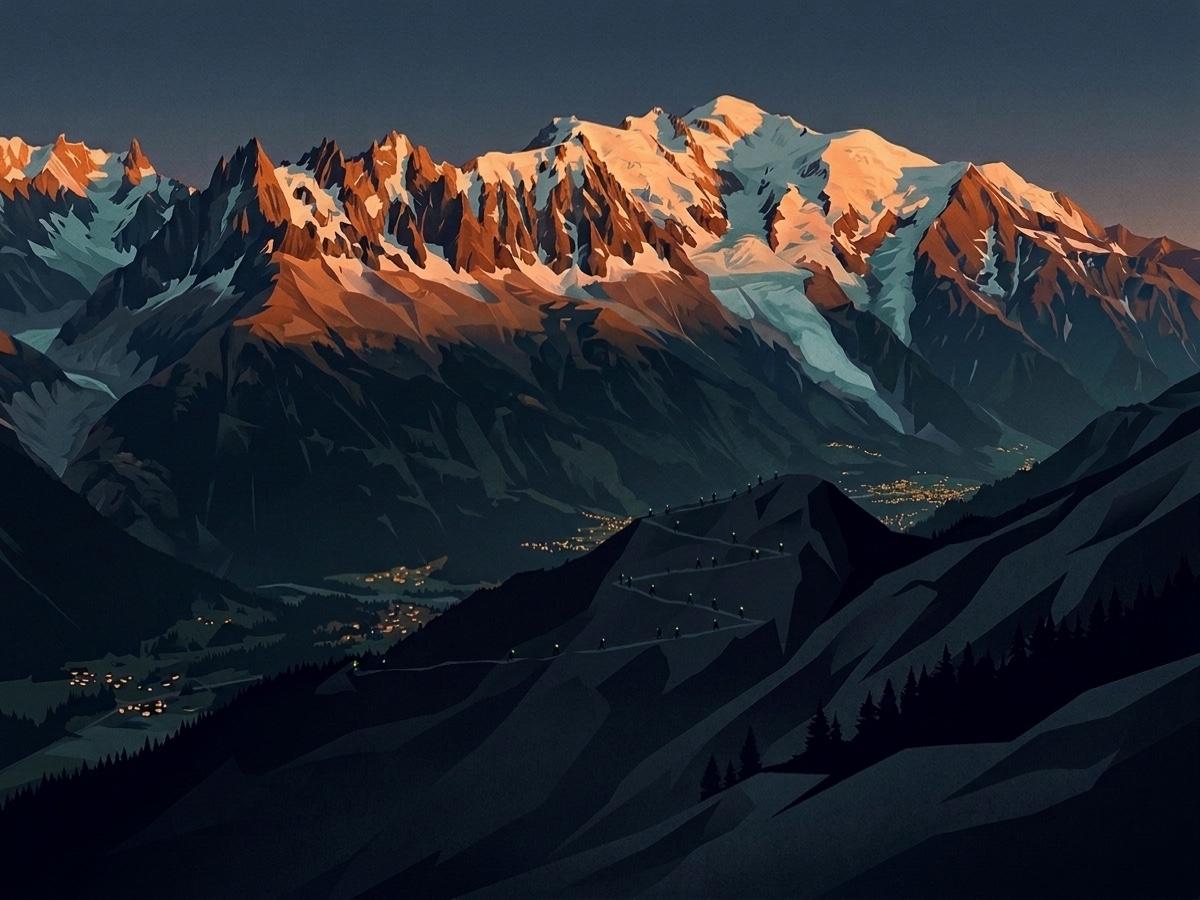 The World MonumentsThe races that wrote ultra-running history. Names spoken in a low voice, finish lines turned into places of pilgrimage.15 races
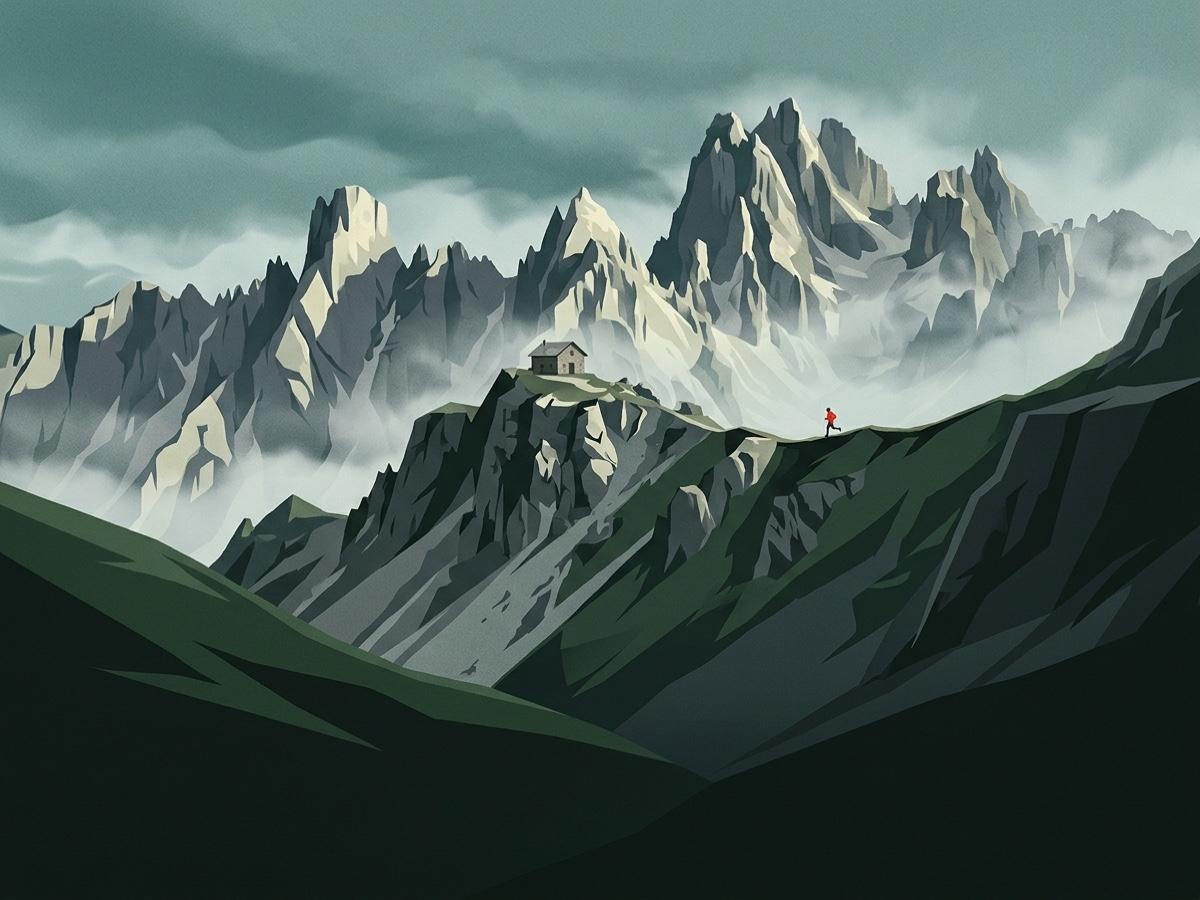 Europe's Wild OnesBoulder fields, faint ridgelines, isolated huts: alpine and Pyrenean Europe at its rawest.38 races
 High Altitude & DesertsWhen the air thins or the sun flattens everything. Races where the environment is an opponent in its own right.8 races
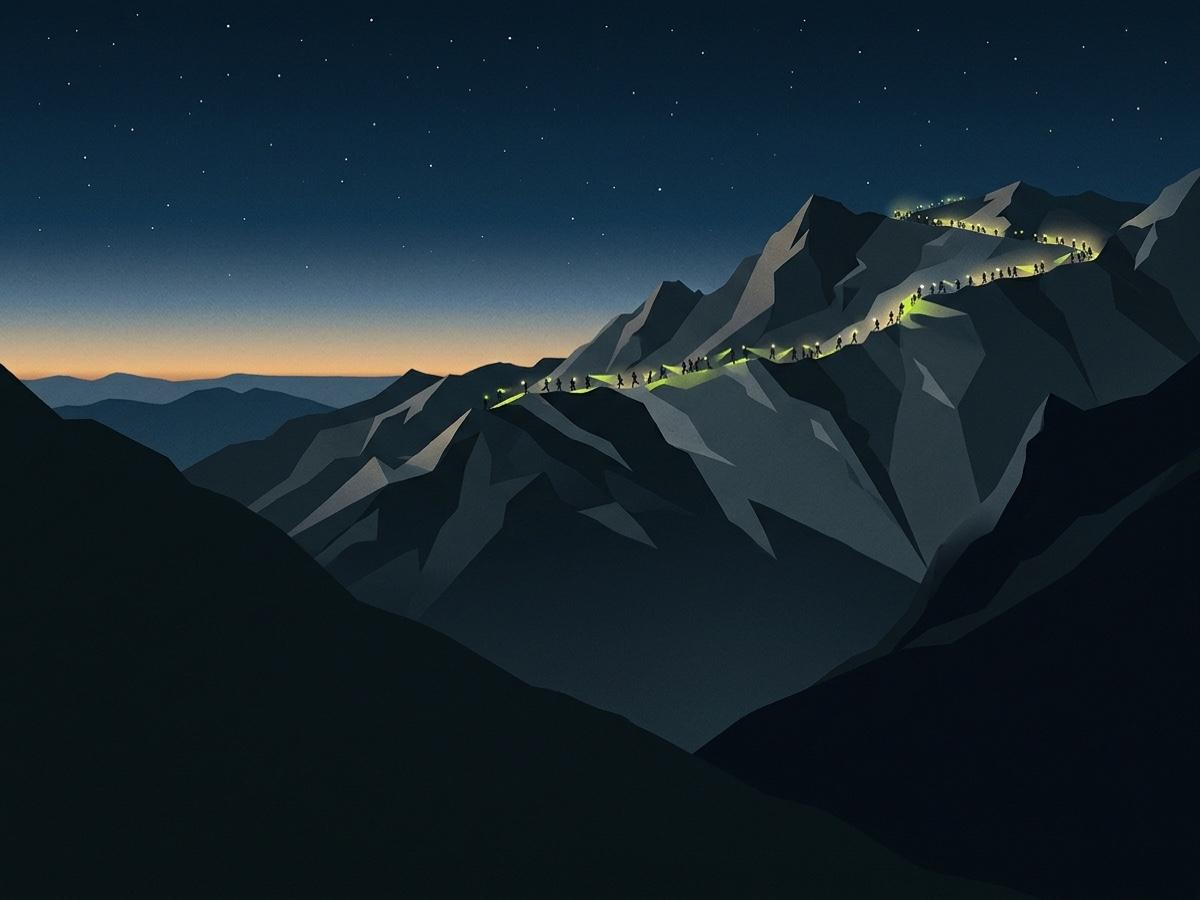 The 100-Mile Format160 kilometres, at least one night, often two. The royal distance, the one that tips a runner into another dimension.30 races
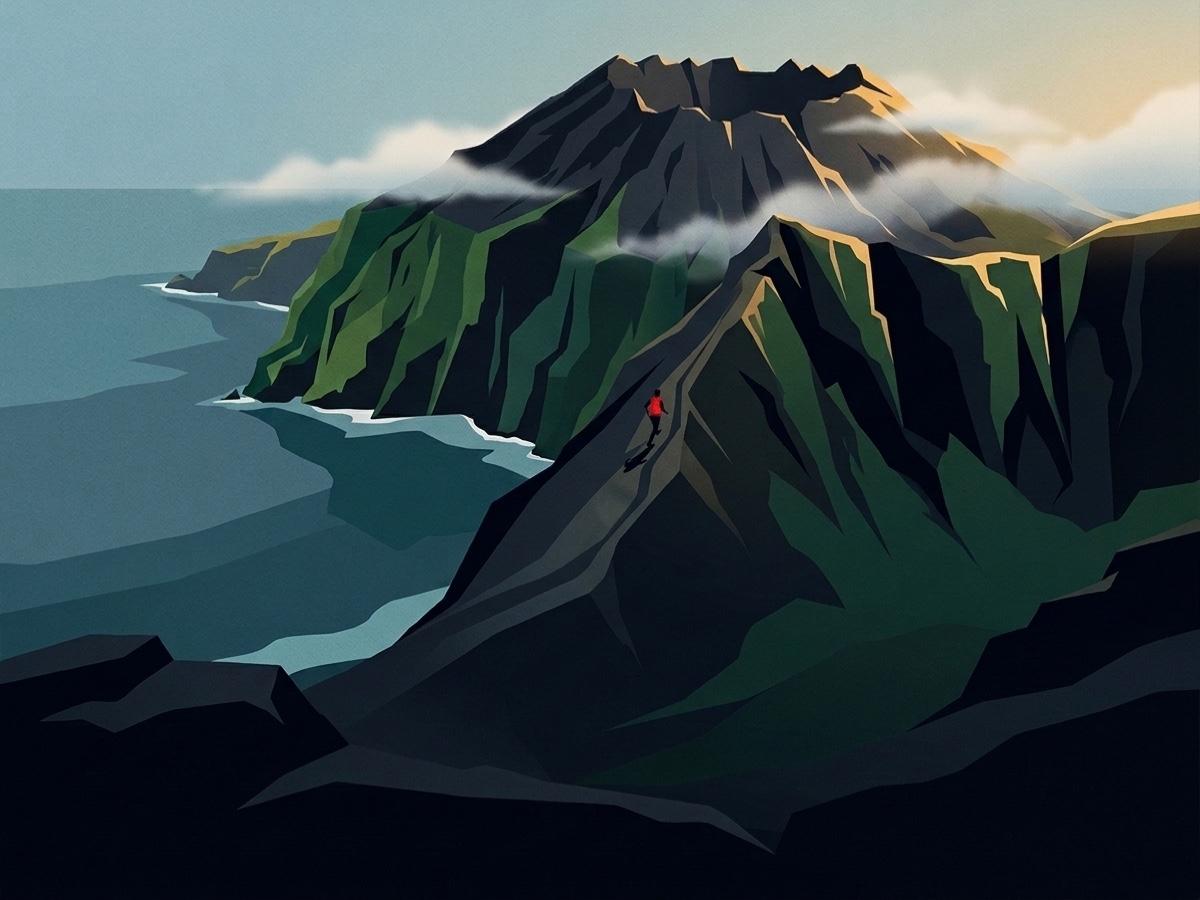 Islands & OceansVolcanoes, cliffs plunging into the ocean, tropical light: crossings that start at sea level and return there, transformed.8 races
 The Giants (200 km+)Beyond 200 km, racing becomes sleep management, an economy of the self. Multi-day epics.13 races
Filter by region, season, distance or entry type.
104 races
The benchmark. Not the most technical, but the densest: crowds, history and passes that follow each other without mercy.
The planet's craziest 100-miler, literally: steps cut into rock, roots, mud and heat, carried by an entire island.
The original 100-miler. Fast and downhill, but booby-trapped by canyon heat: here you win with your head and with ice.
The archetypal American mountain race. The average altitude makes every climb a breathing test; afternoon thunderstorms make it a test of judgement.
An odyssey, not a race. Sleep management matters as much as legs, and the Aosta Valley adopts you night after night.
Closer to an initiation riddle than a footrace: under 2% success since 1995, zero markings and a legend carved out of briars.
Fast, runnable and sublime. Europe's most photogenic 120 km — as long as you can handle a sleepless night from the gun.
Thousands of stone steps carved into basalt, a humid night tipping into gale-force ridge winds: the steepest great island crossing in Europe.
One of Europe's most technical races. Here you don't always run: you hop, climb and down-climb.
Swiss alpine scenery at its most relentless: 66 m of climb per kilometre with the dark wall of the Eiger watching every stride.
Less polished than Chamonix, rawer and rockier: 174 km of granite boulder fields, glacial tarns and Pyrenean grit that forgive nothing.
Since 1995, autumn's grand gathering in Millau: fast across the limestone plateaux, tricky along cliff ledges and unforgiving up the final Pouncho d'Agast.
Born in 1952 and still in a league of its own: neither pure mountain nor road race, but a nocturnal winter pilgrimage where the weather writes the script.
Probably the world's most beautiful urban 100 km: Table Mountain and the Atlantic as a permanent backdrop, with a very technical first half.
Asia's great 100-miler. Flawless organisation, courteous fervour and a mountain watching you at every turn.
The big opener of the European season: a midnight start on Las Canteras beach, volcanic rock and a downhill finale that wears you out more than you think.
The warmest, most runnable 100-miler in the southern hemisphere: tree ferns, geothermal steam and a carved greenstone pounamu at the finish.
"Britain's Most Brutal" is no marketing gimmick: eight hours of daylight, knee-deep frozen peat bogs and six and a half days of moving survival to Scotland.
Catalan mountain fervour at full tilt: a 1,725 m wall straight from the gun up to Niu de l'Àliga, then limestone ridges beneath Pedraforca.
Four days and four nights in a Western epic: baking canyon floors on day one, freezing air above 3,200 m in the La Sals.
Pure skyrunning across 73 volcanic kilometres: a relentless climb from sea level to 2,421 m, followed by one of the most quad-shredding descents in world trail running down to Tazacorte.
A pocket-sized UTMB in a single day: 101 km and 6,000 m of climbing on the legendary route, from the cool of Courmayeur to the sting of the final climb through the Vallons de Chéserys.
February's fastest and most coveted ultra: a runnable 100 km among saguaro cacti where every Western States Golden Ticket is decided by the minute.
One hundred kilometres through the American River canyons on the Western States Trail, with a ticket to the big dance for the top three.
The ultra run as a pair and lived as a serial: some 14,000 m of climbing across seven stages, a route that changes every year, and a finish beside a lake.
South America's biggest trail festival peaks with a 160 km loop stacking 9,200 m of climbing from Chapelco to Quilanlahue, with hardly a pause.
The Pyrenees' most complete 100-miler on the UTMB calendar: 10,000 m of climbing, lake cirques, abandoned mines and a 48-hour limit that punishes slow pacing.
One of the toughest and oldest 100-milers in the US: a point-to-point traverse of the Wasatch crest, from afternoon heat to a high-altitude night, in 36 hours.
One of America's oldest 100-milers: fast but never flat, with about 5,200 m of gain in relentless rolling waves, shared with horses.
One of America's oldest 100-milers: humid heat, forest roads and a single cut-off, with the sub-24-hour silver buckle as the prize.
The carnival of 100-milers: fast, shadeless, in costume, and one of the best doors into Western States.
One of the most demanding mountain 100-milers in the Rockies: 161 km at high altitude (topping out near 3,993 m), ~7,100 m of climbing, and 37 hours on a wild loop linking the Continental Divide and Colorado Trails.
Canada's classic boreal-forest ultra: a 124.1 km point-to-point traverse with 4,028 m of climbing from ZEC des Martres to Mont Grand-Fonds, famed for its technical trails and 'wolfpack' spirit.
Québec Mega Trail's flagship distance since 2025 (formed by merging the former 100-miler and 110 km): 134 km, 6,000 m of climbing and 37 hours above the St. Lawrence River, part of the World Trail Majors.
One of Canada's toughest 100-milers: 161 km and 6,692 m of climbing split into 7 legs around Crowsnest Pass, with a tight 30-hour limit and a feared alpine Leg 6 beneath Seven Sisters Mountain.
Britain's premier fast, runnable 100-miler: 161 km and 3,870 m of rolling chalk-hill climbing across southern England, staged by Centurion Running as part of the World Trail Majors.
Britain's mountain ultra monument: an unmarked 105-mile (~169 km) loop with 6,300 m of climbing around the Lake District, starting Friday at 6 p.m. with a 40-hour cutoff back in Coniston.
Scotland's great classic: 95 miles (~153 km) and about 4,500 m of climbing along the West Highland Way trail from Milngavie to Fort William, with a 35-hour limit and a mandatory support crew.
The signature ultra of French-speaking Switzerland's oldest trail event: about 114 km and 4,700 m of climbing over Jura ridges, pastures and gorges, a 5 a.m. start and 29 hours to get back to Couvet.
The Mercantour's big ultra: 122 km and over 7,200 m of climbing in a single loop from Saint-Martin-Vésubie, swinging between baking valley floors and bare ridges, with barely one starter in two finishing.
The French Alps' great spring classic: a full lap of Lake Annecy along its ridges, fast and punishing, run clockwise since 2026, with 24 hours to cover 100 km and ~5,400 m of climbing.
One of France's oldest trail races (1990): 69 km and 3,400 m of climbing from the Tarentaise valley to the snowfields of the Bellecôte glacier, with more than 1,000 finishers every summer since 2024.
More climbing per kilometre than the UTMB, two nights for most, the Passeur de Pralognan and the highest drop rate of the week: the TDS is the family's rough-edged sibling.
The Austrian stop of the UTMB World Series: a one-day ultra (5 a.m. start, 24-hour limit) linking turquoise lakes and pre-Alpine summits, now based on the shore of the Fuschlsee rather than in the heart of Salzburg.
The great Wetterstein loop at the heart of Germany's biggest trail event: 107 km and 5,280 m of climbing between Bavaria and Tyrol, a 10 p.m. start and 27 hours to finish.
The Rockies' autumn 100-miler: less altitude than its Colorado neighbours, but a brutal opening climb, a long cold night and 36 hours to reach Bear Lake.
America's first non-repetitive 200-miler: 322 km and 9,780 m of climbing around Lake Tahoe, back on its original full loop since 2026.
A wild-mountain June 100-miler: a turnaround at 8,800 feet, 35 hours to complete the out-and-back and mud that marked several editions.
A 250-miler now decided by lottery: heat, long remote stretches and five days to complete the course.
A July 100-miler starting in Easton, a ticket-based lottery and a 2027 course that will most likely be out-and-back after the Three Queens Fire.
A June 50-miler in the San Juans: in 2026, two crossings above 13,000 feet according to one runner, a 16-hour cutoff, and a lottery announced for 2027.
A Destination Trail point-to-point 200-miler: 322 km, 13,436 m of announced climbing and 107 hours to reach the finish.
A mountain 50K at Snowbird, summits at 11,000 ft, a Running Stones lottery and a start announced for 24 July 2027.
A fast, gently rolling ultra (867 m of climbing) in Dalarna: 7 checkpoints, cut-offs on the last three, start on 21 August 2027.
168 km and 2,020 m of gain in 2027, start on 5 November at 6 p.m. in Höganäs, 32 hours maximum. Sold out on the official page.
Race on 17 July 2027, about 55 km. Registration closed, bibs announced on 25 November 2026.
100 miles on 17 September 2027, about 163 km and 6,200 m of gain per the organisers. Entries open 6 December 2026.
105 km and 6,800 m of gain on Saturday 12 June 2027 from Ordino, 34 hours maximum. Bib: entries open, €315.10.
170 km, about 11,500 m of gain, 53 hours maximum. 2027 edition from 24 to 26 September in Vezza d'Oglio; 2027 entries not yet announced.
106 km, 5,600 m of gain, 25:30 cutoff in 2025. 2027 edition on 24 April; pre-registration 19 November to 8 December 2026, draw on 11 December.
380 km, 16,400 m of ascent, six days. 2027 edition on 6-11 September; Full Dragon at £2,095 on the entry page (£2,099 in the formats comparison).
Uncertain status: the committee announced it would not hold the 2026 edition of the ultra and, for 2027, only the Marimurumendi (marathon, 10 July) is announced. Last known format: 171 km, 10,500 m of ascent (2025).
A UTMB ultra in Tuscany, in March, with 5,200 m of climbing and 26 h 30 to finish: vineyards early on, rougher ground in the second half.
A UTMB ultra in Istria, 17:00 Friday start in April, 6,800 m of climbing and 45 hours to finish.
The 120K: 21:00 start on Friday 17 September 2027, 5,855 m of climbing and 32 hours maximum.
A Salomon ultra in Cappadocia, a loop of about 119 km and 3,730 m of climbing; 2027 dates not published (mid-October according to Finishers).
A World Trail Majors 100 km in South-East Asia, which the organisers describe as a "seriously tough" ultra covering every type of terrain in the area: expect more than 5,000 m of climbing.
An alpine 110 km starting at night in Kaprun: two crossings of the main Alpine ridge, snowfields and 29 hours to get it done.
A Swiss alpine 140 km starting from Verbier at 10 p.m.: 9,300 m of official D+ and a 42-hour time limit.
A maritime 175 km ultra around the Gulf of Morbihan: 42-hour limit, a lottery for the bib and a boat crossing of the gulf's mouth at mid-race.
A northern 100 miler that opens with technical trails, passes and the Kvalvika beaches, starting at noon on Friday.
A wild, technical 110 km in the heart of Corsica, starting at night in Corte with 48 hours to finish.
A 60 km loop over a mountain range with about 2,200 m of climbing, knee-jarring descents and bibs that sell out within minutes.
A 100-miler on a rocky trail through remote wilderness, which a runner quoted in the 2024 press called probably the hardest in Australia.
A "160" that is not 160 km: a renamed course, 173 km and 9,800 m of climbing in 2026, described as brutal by the press in 2025.
A Japanese 100-miler with a lot of runnable ground: 163 km, a 33-hour limit, an evening start and tightly regulated assistance.
A Chinese ultra founded in 2013, described as slippery and muddy, whose distance varies from 103.5 to 106 km depending on the source.
Nearly 400 km point-to-point across the whole Valais, from the Rhône's source to Lake Geneva: a multi-day monument, open to all but not to be taken lightly.
The southern hemisphere's great classic: fast, varied, and a finish up the Furber Steps that has brought many runners to tears.
One of Europe's steepest 100-milers, run from 2011 to 2019: 170 km and 13,500 m of climbing around Andorra. It no longer exists; its spirit lives on in the Ultra 105K of Trail 100 Andorra by UTMB.
Not technical, but the air is thin everywhere. The high drop rate comes down to one thing: altitude, and Hope Pass to cross twice.
A unique ultra: little climbing but sand, 40 °C and a 6.5-15 kg pack. You come for the great adventure rather than the clock.
A 100 km that turns clichés upside down: 70 % of Hong Kong is wild, and its concrete steps break legs more surely than an alpine pass.
An unsupported winter survival test where cold, deep mud and sleep deprivation turn the Ardennes into expedition terrain.
A 100-miler that looks runnable on paper yet wears down legs relentlessly across the valleys of Spa, Theux, Stoumont, Malmedy and Stavelot.
A 100-miler held only every three years (last edition in 2026, back in May 2029): 165 km and 6,300 m of climbing per the GT160 page, a qualifier for the Western States 100 lottery.
A deceptive Ardennes 100K: runnable in sections yet relentless over 3,150 m of climbing under an 18-hour cut-off, anchored by Houffalize’s festive atmosphere.
One of Belgium’s toughest and most technical trails: little easy running, a tight 13-hour cut-off and relentless footing demands.
A polished summer point-to-point 100 km from the High Fens to the Baraque de Fraiture base camp, packing 3,830 m D+ and a three-day festival vibe.
One of the Benelux’s best-run 100Ks: a figure-eight loop returning through Bouillon at km 57, drop bags, a generous 20 h cut-off and dramatic medieval scenery.
A genuine winter 100-miler worthy of its Belgian Siberia nickname: modest elevation ceiling, yet relentless steep valley climbs, sucking mud, and freezing darkness. Ideal early-season 160 km test with solid organisation and Chimay waiting at the finish.
A beloved, no-frills classic since 1996 where runners come as much for the November mud as for the Cercle Sportif Olnois hospitality.
A grassroots club ultra by BioTrail at unbeatable value (€60), blending Walloon military heritage, unmarked night GPX navigation, and homemade local aid stations leading into a lively Citadelle after-party.
A raw two-act Legends format: first an unmarked, GPX-free 84 km map-navigation journey to earn your place on the 111 km start line at dawn.
Belgium's benchmark technical ultra: mountain-grade climbing density packed into the Amblève valley and Ninglinspo gorge.
An accessible, high-value 80K (€50 with live-tracking included): less rocky than deep Ardennes races, yet demanding with 2,250 m D+ and a tight-knit field.
Benelux's benchmark 200 km ultra: two nights out, ~7,600–8,000 m D+ with zero flat relief, and ~50% attrition despite legendary checkpoint hospitality.
Flemish Brabant's ultimate winter endurance test: modest gradients yet brutal mental attrition from endless December darkness, icy Pécrot mud, and strict no-crew rules, buoyed by extraordinary volunteers.
The summer counterpart to Bello Gallico across the same Brabant forests, trading December frost for July humidity, zero course markings, and a tiny hardcore field (just 3 BWT200 finishers in 2026).
A unique European mass-endurance monument: 13,000 walkers setting off at 9:00 PM into the Klein-Brabant night with no rankings or podiums. The course is flat and generously stocked, yet relentless tarmac, sleep deprivation, and the 24-hour 100 km grind still claim around 27% of starters.
The green, sandy counterpart to Dodentocht: far less tarmac, much wilder, and just as unforgiving (57% finisher rate on the 100 km in 2026). Ideal for endurance walkers seeking Flemish wilderness over asphalt.
Nicknamed 'The Brutal One', the Grizzly 100 proves you don't need high mountains to wreck your legs: over 3,000 m of sawtooth climbing, October mudbaths, and a double visit to the Three-Country Point. A raw, demanding Benelux benchmark.
Profile benchmarked at the 24 h / 100-mile mark (161 km / 840 m D+, cleared by ~31% of starters in 2025), while the real race ends only with the last person standing. Retie has become the world's premier record factory: a world record of 116 loops in April 2025, then 124 loops (~831 km) by Ivo Steyaert and Merijn Geerts in October 2026.
Belgium's premier early-autumn runnable ultra: accessible without barriers, eco-certified via the Train By Train Tour, and ideal for a fast first 80 km or autumn benchmark.


